Gergovie Gallic Oppidum
On our holidays this year we had the opportunity to visit the site of Gergovie the 46 hectare Gallic Oppidum and capital of the Averni tribe. It is a very impressive site, set in the mountains of the Masif Central overlooking the Puys valley. The museum is excellent and has quite a good collection of artifacts and models of the city based on some archeological evidence of the battle. The site is huge and uneven so bring good walking shoes. Thought to be the first defeat of Caesar by the Gauls, in Caesars accounts 46 centurions died in the battle on the assault of the hilltop fortification of Gergovie.

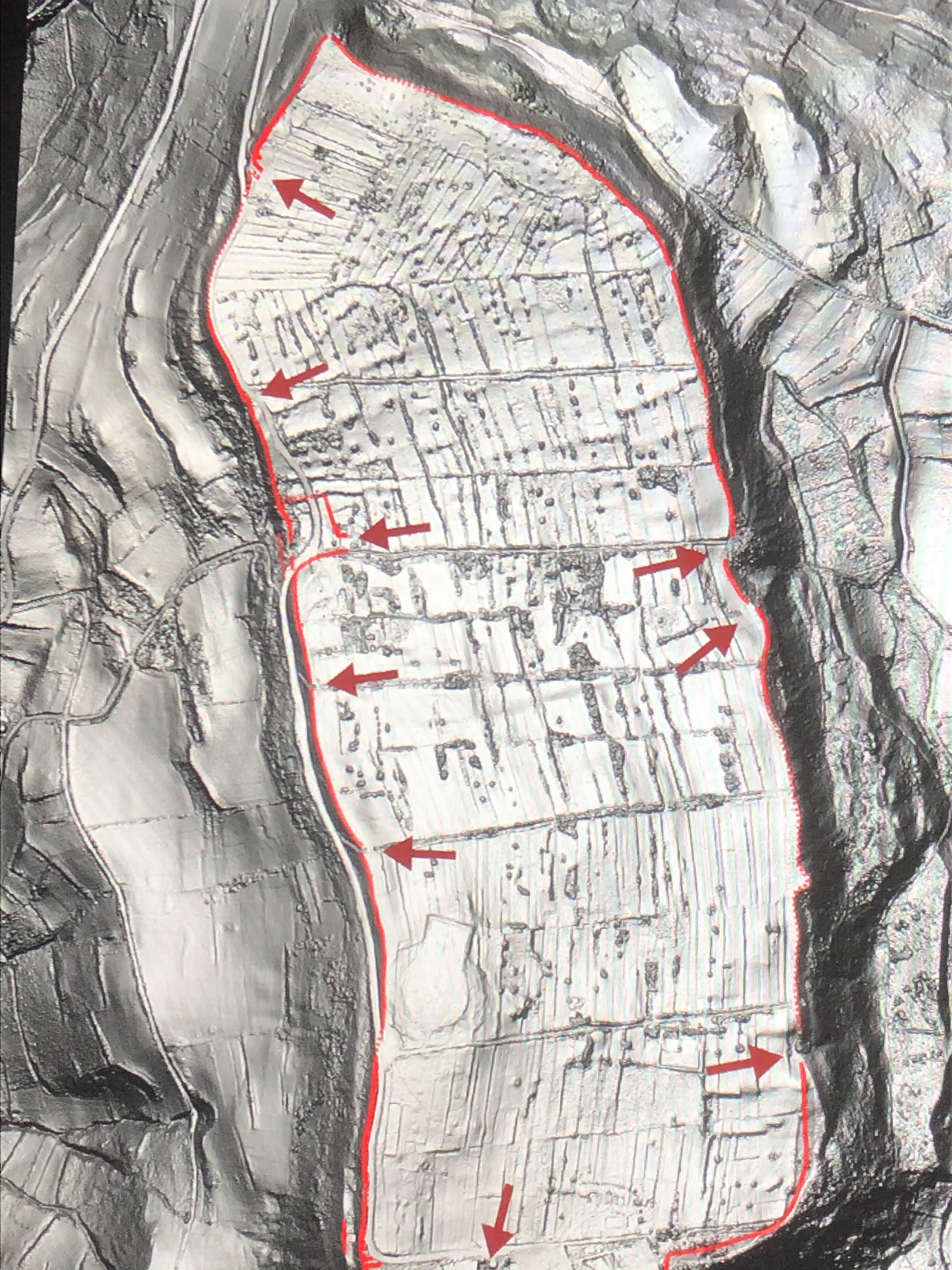
Map of the site of Gergovie with the gates maked with arrows, the southern gate has the square on the left for the entry, a lane still exists today so you can walk it back to the base of the mountain, a warning it is quite treacherous....

Caesars main fortified encampment occupied this hill controlling the entry to Gergovie, it was also the supply route for the city controlling the water supply, to the left was the river. Originally occupied by Gauls it was seized in a night raid by two legions. after seizing the hill a Roman fortification was built. To the right they built a wall some 6klm long with forts along it and 2 legions were stationed at both ends

This is the centre of the view, the Roman wall was built across the valley to the centre to join with the gallic settlement in the middle which became the main Roman encampment then to the right hill on which a third fortification was built. This is also the spur that the Roman and allied troops advanced up (photo from the lower Gallic stone and wooden wall) as you can see it is quite steep.

Looking from the south gate to the right you will see one of the hills captured then fortified by the Romans during the siege at the extreme end of the flank, this is the location that the 10th Legion advanced from to halt the fleeing Roman legions and the departure of the cavalry feint to the left of the Roman lines up the Rizolles ridgeline.
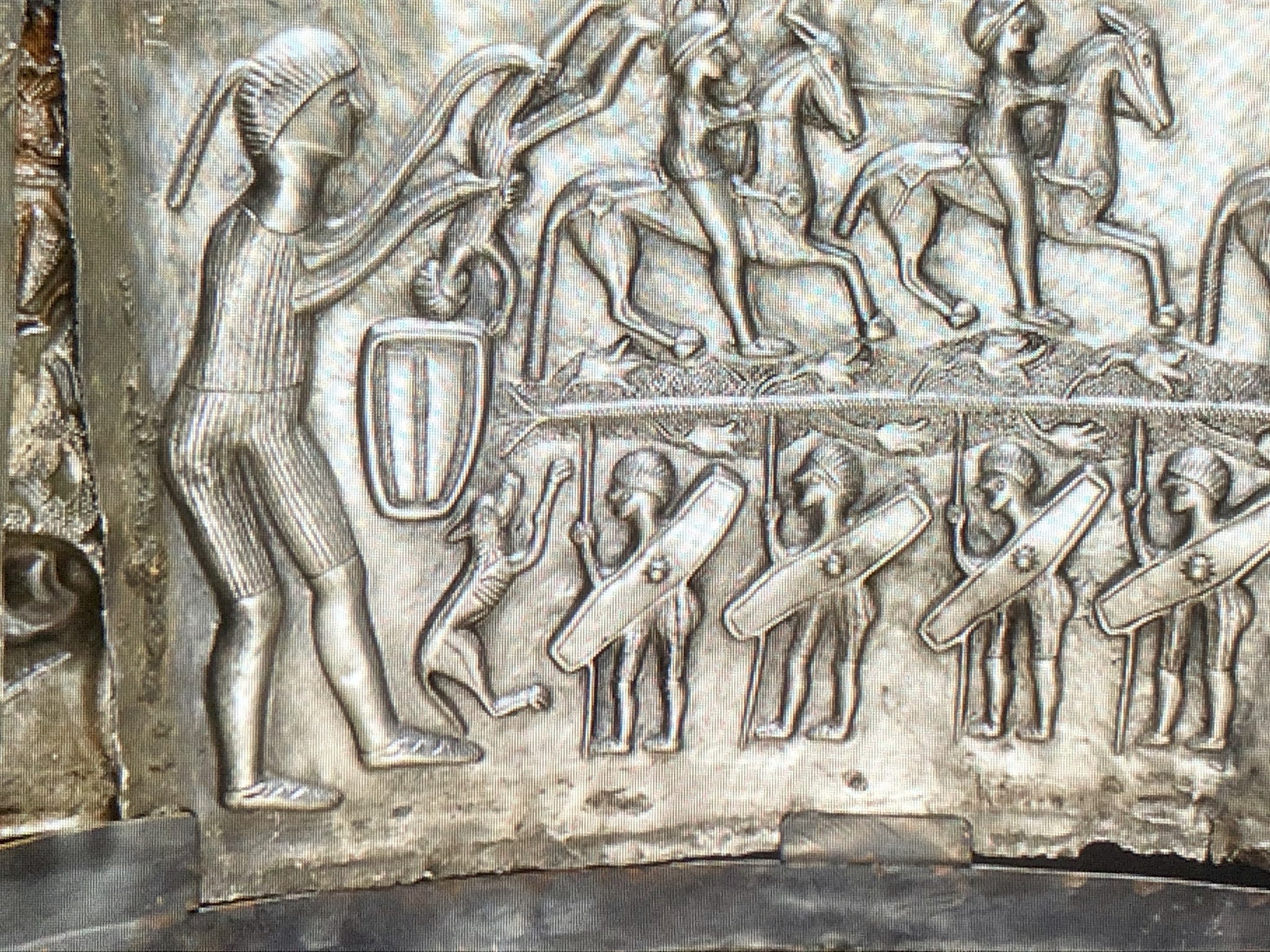
The Roman assault on the fortifications was carried out by four legions and all of the allied Gallic auxillia including the mounted allied Haedui (Aedui) cavalry (who had dubious loyalty after recently rebelling and were on the Roman right flank) meanwhile on the Roman left, a feint was made with more Gallic cavalry, mule riders dressed as roman cavalry and a legion of infantry toward the Rizolles ridge and the northern gate of the Oppidum. The Roman feint was meant to draw off Vercingetorix's cavalry who were on the Rizolles ridgeline defending the only supply route left open to the city.
When the romans assaulted the fortifications they broke through the outer wall of stone and wood with ease, pillaging the gallic campsites and forcing the defenders back to the main walls. During the fighting Lucius Fabius centurion of the legio VIII is said to of mounted the walls near the South gate before being slain (by a women French legend has it). Marcus Petronius Centurion of the VIII sacrificed himself in front of the South gate to save other members of his maniple when they were surrounded. Gallic reserves arrived in time to save the gate from being taken.
It is then thought that Vercingetorix lead the gallic cavalry from the western gate against the roman left flank of Caesars assaulting legions. Vercingetorix riding between the outer and inner wall pinning the romans against the walls. At this point the Roman Allied cavalry of the Haedui (Aedui) arrived on the Roman right flank, the Roman legionaries mistaking them as more Gallic cavalry broke and fled back down the mountain
Caesar he may of lost the entire four legions had not the reserve centuries of XIII lead by Titus Sextius the commander of the siege line walls in the centre and the 10th Legion lead by Caesar arriving on the left flank stopped the pursuing Gallic cavalry as the romans routed back down the mountain towards their own lines.
In Caesars accounts he only lost 700 men and 46 centurions (1/3 of the centurions in the army), but modern scholars think including allies as many as 6000 perished. After the defeat he withdrew his army and Vercingetorix followed him north trying to prevent his link up with Labineius legions fighting south east of Paris against the Parisi, Carnutes and the Aulerci tribe confederation.
Caesar's army consisted of 6 legions during the siege
- Legio V (recruited in Cisalpine Gaul, possibly commanded by Quintus Tullius Cicero)
- Legio VI (recruited in Cisalpine Gaul, possibly commanded by Mark Anthony)
- Legio VIII (highest casualties at the battle)
- Legio X commanded by Caesar personally
- Legio XI
- Legio XIII (commanded Quaestor Lucius Roscius)
- Gallic Auxiliary Infantry, Slingers and javelins
- Cretan archers
- Numidian cavalry ?
- Balearic slingers
- Germanic Auxillia and cavalry
- Gallic cavalry (Aedui) plus other allied tribal cavalry
Averni
Scholars think the tribe may of had as many as ten thousand people within the walls and several thousand cavalry and infantry outside the walls (4000 is quoted)
Gergovie Oppidum Walls
The Gallic walls were a mix of stone and timber with an out and inner set of fortifications plus the use of the incline and cliffs made it almost impregnable on two sides, it was not some simple wooden and earthen fort we often think of when we think of gallic fortifications.
The walls of Gergovie with the outer and the inner walls
Cross section of a inner gallic wall
artist impression of the walls, interesting they think that the timber palisade leans inward
typical gallic construction of a Gallic Oppidum walls
Artist Impression of the South Gate that was assaulted by the Romans
Archaeological dig of the south gate
Artist impression of the south gate, a typical pincer gate built by the Gauls, we have one also at Moulay capital of the Aulerci Diablintes
a model based on the archeological dig of the site in the 1980s
profile of the outer wall
 |
Onager balls, these are the earliest example of caesarean period ones.
 |
Torsion Balista found in the stone walls
Art and weapons
I also was astonished at the beauty of some of the vases found on the site with typic Gaulois type artwork, they certainly were gifted artisans in metal, put the pottery was something new to me.
Astonishing piece of work this is
 |
Deer representations
|
great inspiration for painting shields
common design in simple household pottery, I have seen these in Paris and Rennes
buckles and cloak pins
Helmet band in bronze
shield boss


 |
Gaulois drinking bowl
|
Buildings and structures
I also was shocked by the round theatre found on a nearby oppidum, archaeologists date it to before Roman occupation, they are not sure if it was used as a parliament or as entertainment or both, perhaps not the Barbarians that the Roman propaganda machine places in front of us!
The Averni Theatre, Parliament entertainment or both?
 |
| Layout of the village |
Market square
village houses
Farms
I will be using these building images for my Gallic fortress build
I think it was well worth the trip, there is so much more to be discovered in the region and we hope to return soon and visit the Averni capital south of Clermont Ferand.
cheers
Matt


 cheers