The Barons wars in France, 1173-1215
I am researching a list of local nobles suitable for the Barons Wars skirmish rules for the period from 1173-1217 for my Barons war collection.As we live in Mayenne (Maine) the old heartland of the Plantagenets, I plan to build armies for the collapse of the Plantagenet territory in western France commencing with King Herni II and his sons Henri, Geoffroy and Richards rebellions, then the wars between King Richard and Phillip Augustus of France, and finally the usurping of the crown and mismanagement by King John from his nephew Aurthur of Bretagne (eldest son of his brother Geoffroy and heir to the crown in Richard the Lionhearts last will). The almost complete defection of the Breton, Anjou-Maine and Norman Barons to King Phillip of France after the abduction of Aurthur sister. Although the Barons wars in England are well known, the French Barons wars are less well known, offering the same challenges of rebellion against rule facing the Plantagenet dynasty in western France
Lots of potential wargame scenarios around the conflicts.
1. First will be young Henry, Richard the Lionheart, and Geoffrey’s supported rebellion by the French King in rebellion against their father Henri II.
2. The conflict during Richards the Lionhearts imprisonment and the chance for Phillip Augustus to seize Plantagenet territory 1293-98. The 15 month campaign commenced in in 1293, some border lords switched alliance and some territory was gained when John seized the throne from his brother, however many of the nobles resisted both John’s and Phillip Augustus. Philippe II made significant gains in Vexin, taking Lyons-la-Forêt, Neaufles, the stronghold of Gisors and Le Vaudreuil south of Rouen (which he failed to take. John then gave up all territory east of the Seine to Phillip. In 1194 Richards ransom was paid and he gained support and landed in Sandwich in March, John’s support melted away in England. Between 1194-99 the two kings engaged in warfare in Normandy and Vexin with both sides employing mercenaries.
3. Then the Baron rebellions in Maine, Brittany and Anjou nobles against John after he seizes the crown in 1198 then murders his nephew Arthur of Brittany, Richards Heir in 1204.
4. Finally the conquest of Normandy, Maine and Anjou by Phillip of France and the failed invasion attempts of John to reconquer Anjou and Brittany, the invasion of England and then finally the battle of Bouvines.
Guy V de Laval
 Stood with Henri II during his son’s revolts, lead the defence of the siege Laval against Richards mercenary Brabant army successfully. A banneret with Henri II army at the siege of Le Mans. Supported Authur of Brittany against John 1198-1204. Then joined king Phillip of France against John.
Hamon L'Enfant lord of Estein, of Quautière, of Varennes, seneschal of Meslay.

A vassal of Guy de Laval whom he served in all his wars in the holy land and in France, he received the castellany of Olivet and Maison of Bourg-Hersand. Backed Aurthur of Brittany, then Phillip Auguste of France against John.
Alard IV of Château-Gontier , lord of Château-Gontier.
Supported Richard, Geoffrey and John during then Breton Norman rebellion, then supported Aurthur against John. La Roque cites him among the knight bannerets who followed Prince Louis operating on the Loire against John in 1204. It is said that he was summoned by Louis to the battle of Bouvines in 1214 , He sealed with his seal the donation of a house of Brissarthe to Saint-Serge in 1215.

Supported Henry II against his sons in the rebellion of Henri II sons. In the Breton- Norman wars of 1198 and 1204, Supported John against Authur, and then during the rebellion in Maine and Bretagne fled to England intrusting his lands to his son John III who swore allegiance to Phillip of France. Returned with John expedition at the battle of Roch en Moines, John made him bailiff of Jersey. Departed on crusade in 1220, entrusting his English lands to his son Raoul. (Whose English arms in 1220 was quartered Argent and Gules)
Juhel III de Mayenne, Baron de Mayenne, Gorron , Ambrières , Châteauneuf sur Colmont (in Saint Mars) and Chartre , with all the castellanies and dependencies of the castles, plus the forest of Fosse- Louvain , dependent on the castellany of Ernée.

Supported Henry II against his sons, then 1198-1204 supported Authur against John. On the albesgensian crusade, possibly also on the third crusade with Richard, although that is contested.
Amaury I de Craon
Lord of Craon, of Chantocé, Ingrandes, Candé, Segré, Durtal, Baugé and of Lude.

Raoul II Fougères (seneshal of Bretagne)
 Raoul territory straddled three duchies, Brittany, Normandy and Maine, so he was always fighting someone and owed 43 knight fees to King Henri II. He held lands all over England also, predominantly in Devon and Cornwall. He was often in conflict with Henri II, as the protector of Constance of Brittany, who later married Geoffroy Plantagenet after the death of Duke Conan of Brittany. Raoul was the guardian of chateaux of Dol de Bretagne (famous in the Bayeaux tapestry) chateau Comburg and Rennes his capital, plus 60 other Motte and Bailey castles in Brittany, Normandy and Maine border. He took the cross in 1163 Crusaded in Egypt for three years before returning to Brittany. In 1165 and 1173 rebelled against Henri II and sought support from Richard and the French King. Leading the Breton Rebel army to defeat at the battle of Saint James de Beuvron 1173 (Saint James), where they retreated to Dol where after a short siege seen 83 barons taken prisoner by King Henri II. After Richard and his Father Henri II reconciled, Raoul was pardoned, Geoffroy Plantagenet then was made Duke of Brittany and Raoul his Seneshal. In 1187 Geoffroy died and Raoul was appointed one the protectors of the young duke Arthur, building the chateau of Fougeres donjon and inner Bailey walls in its current location from stone in 1189. Raoul was the second most powerful noble in Brittany having control of 55 fortified locations in the northern part of Brittany on the Maine and Norman border. He died in 1194.
Roland de Dinan
Guillaume des Roches, the seneschal of Anjou and Maine 1199-1222. Seneschal Touraine1202. Governor of Angers chateau

https://en.wikipedia.org/wiki/Robert_II,_Count_of_Dreux
Alain d'Avaugour (Alain de Goëlo) Chevalier, 2nd count of Goëlo, 2nd count of Trégor count of Penthièvre, 2nd lord of Avaugour (supporter of Authur of Bretagne)

Eudes I of Pontus (Eudon) (1165-1214 ), Baron of Pontchâteau
Alain IV de Rohan 


1188 Vendome Phillip sieges and takes the city then recaptured by Richard lionheart
1189
Siege Rochecorbon (Aquitaine) Richard takes the chateau from Henry II
Battle Azay le Rideau 1189 Richard and John and Philip of France vs Henry II, Henry defeat leads to the
Treaty of Azay-Le-Rideau, two days later Henry dies.
Siege of the Ballon castle 1189
Elijah I of Beaugency seized the Château du Ballon and took advantage of the opportunity to ravage the surrounding area.
Siege of the Ballon castle 1189
In order to put an end to the hegemony of the Plantagenets, Philip II Augustus went to Maine. He seized the castle of Ballon in 1189. The Ballon wooden keep was then burned and dismantled.
Philip II Augustus had the Ballon castle rebuilt and placed Hugues de Beauçais there.
In 1193 , Philip II Augustus took the fortress of Ivry-la-Bataille.
Siege of Le Mans, the Plantagenet capital1189 24 June
1204, 30 June siege of Avaranches Guy of Thouars takes the city and plunders the city
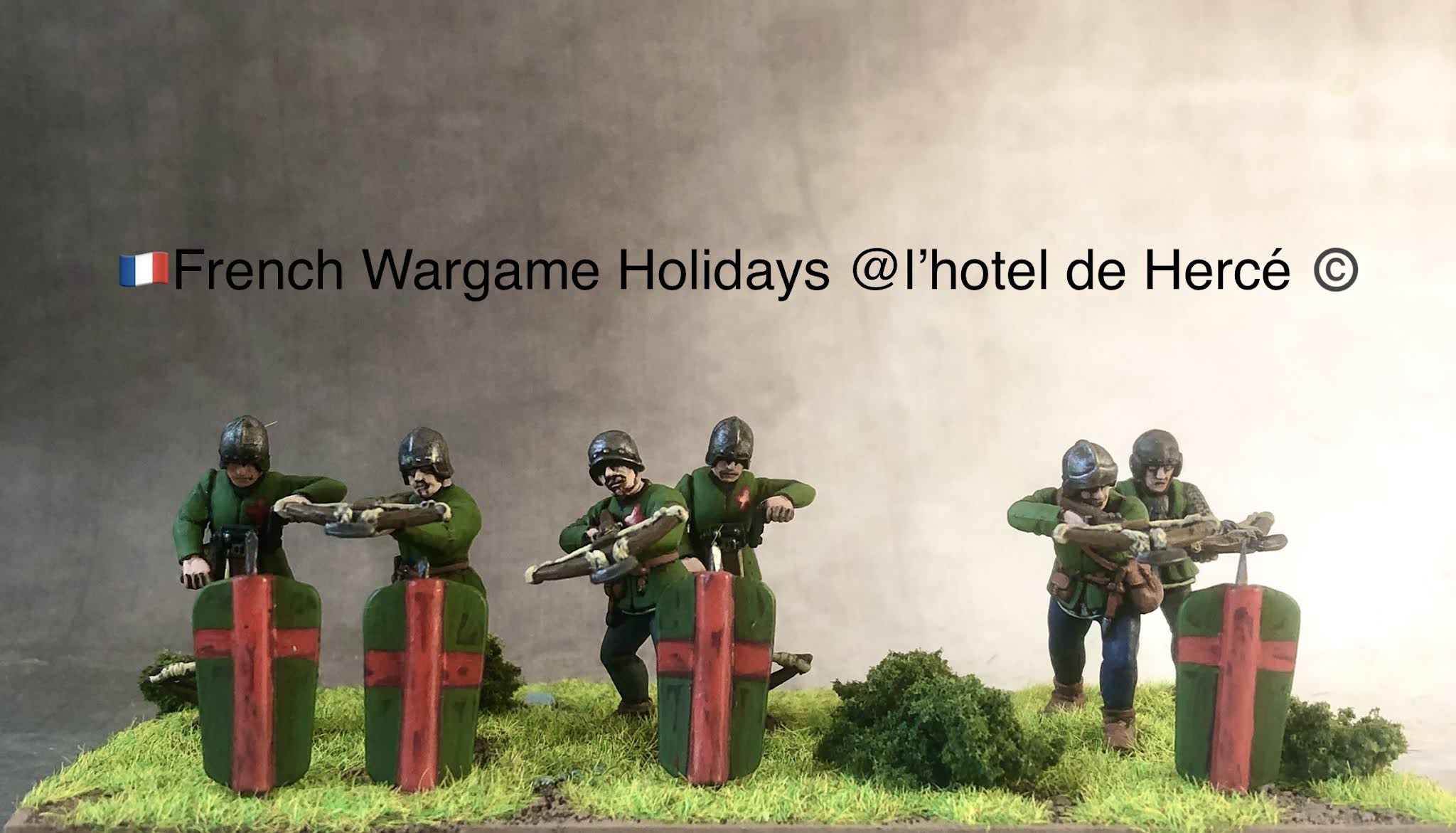
I will concentrate on the Angevin, Maine and Normandy nobles for my collection, to start with, then add others leading up to the invasion of England and the battle of Bouvines eventually. I plan to sabot base my army so they can be used for larger field battles.
Guy de Thouars, duc de Bretagne, and comte de Richmond 1199-1201 ( during the minority of Authur Plantagenet his ward)
 Supported Richard and Geoffroy against Henry II in 1189, stood against Richard and then Authur against John 1198-1204. In 1204 famously burned the monastery of Mont Saint Michel after raiding its treasury and slaughtering the inhabitants, for this he was excommunicated.

Andre III de Vitré (around 1150 †June 9 1211). was Baron de Vitré from 1173 to 1211

Supported Henry during his three sons revolts in the 1170s and again in the 1180s, then joined the third Crusade with Richard, punished John for his seizure of the crown and backed Authur of Bretagne 1198-1204, then supported king Phillip of France against John 1204-11.

In 1173 , during the reconciliation of the Breton lords with Henri II King of England, Rolland de Dinan confirmed his choice during a ceremony attended by the king Henri II Plantagenet and "adopted" the man he now considered his son, Alain de Dinan. Alain succeeded Roland in 1186. Confirmed Seneschal of Brittany and "Justiciar", Alain de Dinan supported Geoffroy II of Brittany. He played an important role in the struggle of his widow Constance of Brittany against Richard the Lionheart and burned the city of Montfort-sur-Meu after a successful siege, which had submitted to the Richard King of England. According to tradition, he fought hand-to-hand with Richard the Lionheart, and unhorsed him during the siege of Aumale lead by the army of Philip Augustus. Alain de Dinan is described by the Chronicle of Paimpont as "one of the bravest of the Bretons". He died some time after this exploit.
Nobles of Plantagenet Anjou - Maine, Normandy and Bretagne
Guy de Thouars, duc de Bretagne, and comte de Richmond 1199-1201 ( during the minority of Authur Plantagenet his ward)
Ranulf IV Le Blondeville (De Gernon) 6th Earl of Chester, 1st Earl of Lincoln, viscount Avaraches and Bessin, Baron of Val de Vire (Normandy)
One of the most powerful nobles in England and Normandy, thought to be born in Montgomeryshire Wales. Nephew of Simon de Montfort, he was knighted in 1188/89, due to his immense wealth he held 61 knights fees to the King. He is said to be short of stature, he married Geoffroy Plantagenets widow Constance of Brittany, his marriage was dissolved in 1189. In 1200 he married Clemence of Fougères, widow of Alain de Dinan and sister of Geoffroy de Fougères. In 1193 he opposed John’s attempt to seize the crown. Between 1199-1204 he supported John against Arthur. In 1204 he lost the vicounty of Avaranches and Bayeux to Phillip Augustus of France. He supported John on his Welsh campaigns and joined him in his Poitou campaign in 1214. He was a leading Baron in support of the king John during the Barons war up until 1217.
Andre III de Vitré (around 1150 †June 9 1211). was Baron de Vitré from 1173 to 1211

Supported Henry during his three sons revolts in the 1170s and again in the 1180s, then joined the third Crusade with Richard, punished John for his seizure of the crown and backed Authur of Bretagne 1198-1204, then supported king Phillip of France against John 1204-11.
Alain de Dinan (younger brother of above, adopted by Roland de Dinan)

Guy V de Laval

Hamon L'Enfant lord of Estein, of Quautière, of Varennes, seneschal of Meslay.

A vassal of Guy de Laval whom he served in all his wars in the holy land and in France, he received the castellany of Olivet and Maison of Bourg-Hersand. Backed Aurthur of Brittany, then Phillip Auguste of France against John.
Alard IV of Château-Gontier , lord of Château-Gontier.
 |
| D'argent à trois chevrons de gueules |
Supported Richard, Geoffrey and John during then Breton Norman rebellion, then supported Aurthur against John. La Roque cites him among the knight bannerets who followed Prince Louis operating on the Loire against John in 1204. It is said that he was summoned by Louis to the battle of Bouvines in 1214 , He sealed with his seal the donation of a house of Brissarthe to Saint-Serge in 1215.
Harcoul de Subligny, lord of Dol, Comburg and Avaranches.

Juhel III de Mayenne, Baron de Mayenne, Gorron , Ambrières , Châteauneuf sur Colmont (in Saint Mars) and Chartre , with all the castellanies and dependencies of the castles, plus the forest of Fosse- Louvain , dependent on the castellany of Ernée.

Amaury I de Craon
Lord of Craon, of Chantocé, Ingrandes, Candé, Segré, Durtal, Baugé and of Lude.

Supported Authur of Brittany, then King Louis against John was a knight banneret at Roche-Au-Moines in 1204, possibly at Bouvines. Joined the albesgensian crusade 1217. In 1212 he married Jeanne daughter Guillaume de Roches

Roland de Dinan
 |
| De gueules à une croix ancrée d'argent, chargée de cinq hermines de sable Supported Henri and his claim on Bretagne, Stewart and Grand Justices under Geoffrey Plantagenet, he died in 1189, leaving all of his holdings to his nephew Alain de Vitré |
Rotrou IV of Perche, Viscount of Châteaudun, Lord of Nogent and Mortagne, Count of Perche
 |
| D'azur, au chef d'or. |
Geoffroy III of Perche, his son, took part in the third crusade dies in holy land at the siege of Saint Jean d’Acre 1189
Guillaume des Roches, the seneschal of Anjou and Maine 1199-1222. Seneschal Touraine1202. Governor of Angers chateau

In service with Henri II and was present at his last stand. In service with Richard and negotiated his release from Phillip of France. 1190, William married Margaret of Sablé , the daughter and heiress of Robert IV of Sablé , Grand Master of the Knights Templar . Through this marriage, he became one of the most powerful barons of Anjou and Maine , holding the fiefs of Sablé , La Suze , and Louplande in Maine, and Briollay , Brion , Genneteil , and Précigné in Anjou (plus Agon in Normandy near Coutances, likely descended from Margaret's maternal ancestors, Mayenne - Dinan family.
In 1199 -1204 he supported Authur of Bretagne against John Lackland as he support Kings Richards last Will and testament naming Aurthur as heir. Then supported Phillip against John
Robert II de Dreux
 |
| Échiqueté d'or et d'azur, à la bordure de gueules |
Gaucher III of Châtillon-sur-Marne
 |
| De gueules à trois pals de vair ; au chef d'or |
Raoul VIII of Beaumont-au-Maine 1175-1223 in 1199 Viscount of Beaumont, chateau Domfront, La Fleché, Fresnay, Le Lude and Sainte-Suzanne .

He first supported Arthur I of Brittany , son of Geoffrey II of Brittany , Duke of Brittany , against John his uncle, like the other lords of Le Mans and Maine, then, like the majority, made his peace with the King of England in 1201. Arthur allied King Philip, and resumed the fight against King John, ensuring possession of Domfront and the Norman Passais for Raoul de Beaumont, who from then on, and especially after Arthur 's murder by his uncle, always remained the ally of the King of France, but kept himself as far away as possible from the struggles and wars.

He first supported Arthur I of Brittany , son of Geoffrey II of Brittany , Duke of Brittany , against John his uncle, like the other lords of Le Mans and Maine, then, like the majority, made his peace with the King of England in 1201. Arthur allied King Philip, and resumed the fight against King John, ensuring possession of Domfront and the Norman Passais for Raoul de Beaumont, who from then on, and especially after Arthur 's murder by his uncle, always remained the ally of the King of France, but kept himself as far away as possible from the struggles and wars.
Banneret lord of the Duke of Laval 's army to the Battle of Bouvines in 1214. At the time of the conquest of Normandy by Philip Augustus, the Viscount of Maine handed over the fortress of Domfront to him , and the king disposed of it on several occasions in favor of his supporters. Raoul made homage to the king in 1210 , as well as all his other lands. In 1216 , he renewed his oaths of loyalty to the king and gave him his son Richard as a hostage, promising to have his places opened to him, no doubt when he left for the conquest of England with Prince Louis . This expedition brought excommunication upon him . He returned to France ill; was absolved, made a vow, in case of recovery, to leave for the Holy Land , actually embarked with the Germans and the Czechs , with Raoul, son of the Earl of Chester , the Earl of Nevers , Olivier, son of the King of England , the Earls of La Marche and Bar, was at the siege of Damietta and fell into the hands of the Infidels in 1219 as a hostage. Returned in 1222 and partakes in the Albesgensian crusade with Simon de Montfort.
Alain d'Avaugour (Alain de Goëlo) Chevalier, 2nd count of Goëlo, 2nd count of Trégor count of Penthièvre, 2nd lord of Avaugour (supporter of Authur of Bretagne)

Eudes I of Pontus (Eudon) (1165-1214 ), Baron of Pontchâteau
Fought for Henri II during the Bretagne conquest, excommunicated for ravaging the monks of Redon lands, joined the crusades as a Knigh bannerett with king Richard. Returned and fought for John against Arthur.
 |
| De vair chargé de trois croissants de gueules. |

Another great Breton vicomte (border lord) backed Geoffroy and Richard in their rebellion against Henri. Married to Raoul of Fougeres daughter. Joined Richard on the third crusade. Fought against John 1198-1204.
Husculph de Saint Hilaire, seigneur Saint Hilaire (de Harcouet) and Saint James Normandy

Supported Geoffroy and Richard against Henry II, at battle of Saint James, at Siege of Dol de Bretagne, captured by Henry II parolled with Richard, May of been on crusade with Richard, supported King Philip campaign against John in 1204 in Normandy, Anjou and Maine.
Dreux IV de Mello, constable of France
A Burgundian lord who was a knight Banneret, attend the First Crusade with young Louis, appointed Constable of France in 1198, upon return lead King Phillips invasion of Normandy. He was present at the signing of the Treaty of Gaillon and then participated in the sieges of Château-Gaillard , Falaise , Caen , Bayeux as well as the siege of Rouen . He was then with the royal army during the capture of Loches , which the king handed over to him along with Châtillon-sur-Indre for services rendered. He was too old to be in attendance at the battle of Bouvines.

Rodger de Lacy
Richard de Monfichet (Munfichet) Baron Stansted Montfichet (Essex) sheriff of Essex and Hertfordshire
Richard the Elder campaigned with Richard in Normandy in 1198 and backed Aurthur against John, was in rebellion with his consign de Lacy and Gernon ( Blondeville) he died in 1202, this losing a lot of his lands. Richard the younger was only ten when his father died but was a ward of his uncle Rodger de Lacy, he also stayed in rebellion until 1204. He served with King John in 1214 in the expedition to France. In 1215 he was in rebellion along with his uncles (Robert Fitzwalter) and great uncles (de Clare) and his brother in law William de Forze. He was present at the meeting at Stamford and witnessed several charters and was one of the 25 barons to enforce the Magna Carta on King John. He fought at Lincoln for Louis, was captured and returned to swear allegiance the king in 1217, receiving his English lands back.
Warin de Munchensy
Guilliaume (William) de Forz (Fortibus) 3rd Earl of Albermarle
Guillaume III Mallet de Graville, chevalier Banneret, seigneurial la Graville, Montaigu et Criquetot (Caux, Normandy) and d’Eye Suffolk
Vassal of Jean d’Alençon, supported the rebellion of Richard, then supported John during the war against Authur. Negotiated the treaty of John and the count of Flanders in 1199. Supported John in 1214, at battle of Lincoln
Battles, skirmishes and sieges
1173 battle of Saint James Rebel Bretons supporting Richard and Geoffroy Plantagenet rebellion against his Father Henri II. Rebel loss.
1173 siege of Dol 83 rebel barons captured by Henri II
1189
Siege Rochecorbon (Aquitaine) Richard takes the chateau from Henry II
Battle Azay le Rideau 1189 Richard and John and Philip of France vs Henry II, Henry defeat leads to the
Treaty of Azay-Le-Rideau, two days later Henry dies.
Siege of the Ballon castle 1189
Elijah I of Beaugency seized the Château du Ballon and took advantage of the opportunity to ravage the surrounding area.
Siege of the Ballon castle 1189
In order to put an end to the hegemony of the Plantagenets, Philip II Augustus went to Maine. He seized the castle of Ballon in 1189. The Ballon wooden keep was then burned and dismantled.
Philip II Augustus had the Ballon castle rebuilt and placed Hugues de Beauçais there.
In 1193 , Philip II Augustus took the fortress of Ivry-la-Bataille.
Siege of Le Mans, the Plantagenet capital1189 24 June
1204 Siege Mont saint Michel, Guy of Thouars takes the island for Phillip of France
1204, 30 June siege of Avaranches Guy of Thouars takes the city and plunders the city